Mike’s final transhumance


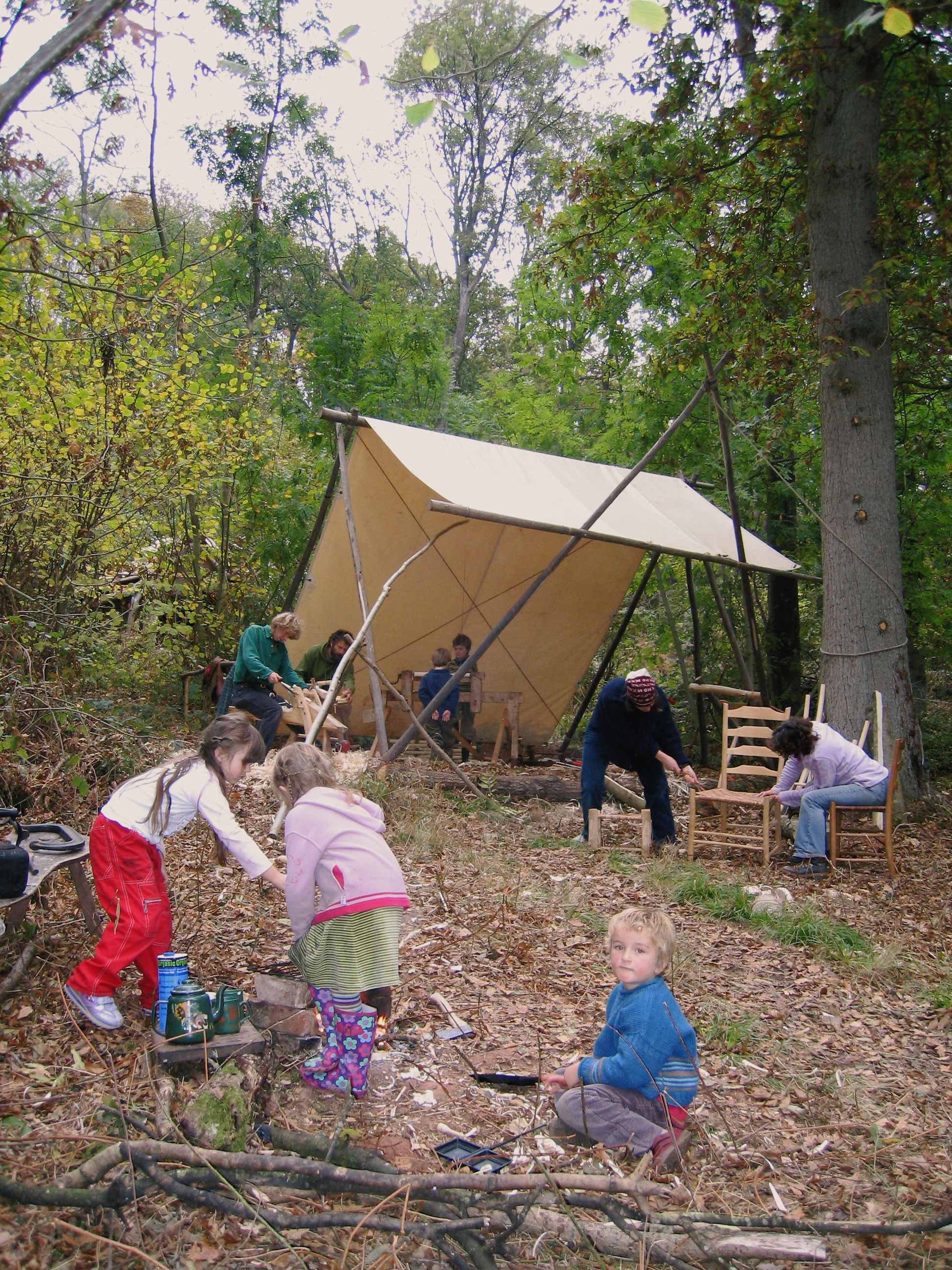
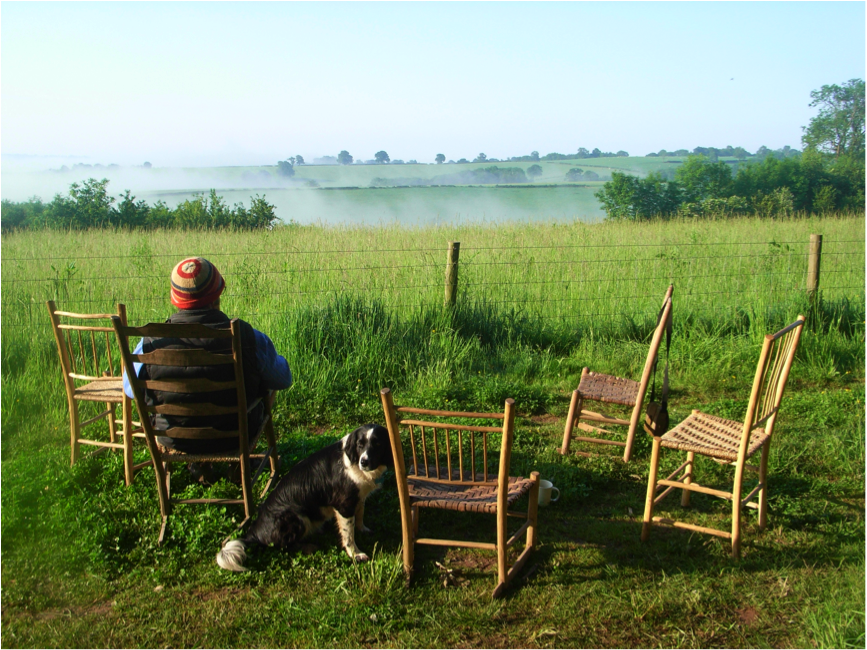
A misty September morning on the Brookhouse Wood 'Verandah'
A misty September morning on the Brookhouse Wood ‘Verandah’

Transhumance is the seasonal movement of people with their livestock between higher summer pastures and winter pastures in the lower valleys. Since I established my enterprise at the end of September 1985, I have made such a twice-yearly journey, moving between my winter retreat and my woodland workshop for a series of summer green wood courses. To coincide with this 30th anniversary, I shall be saying a final farewell to Brookhouse Wood on the last weekend of the September.

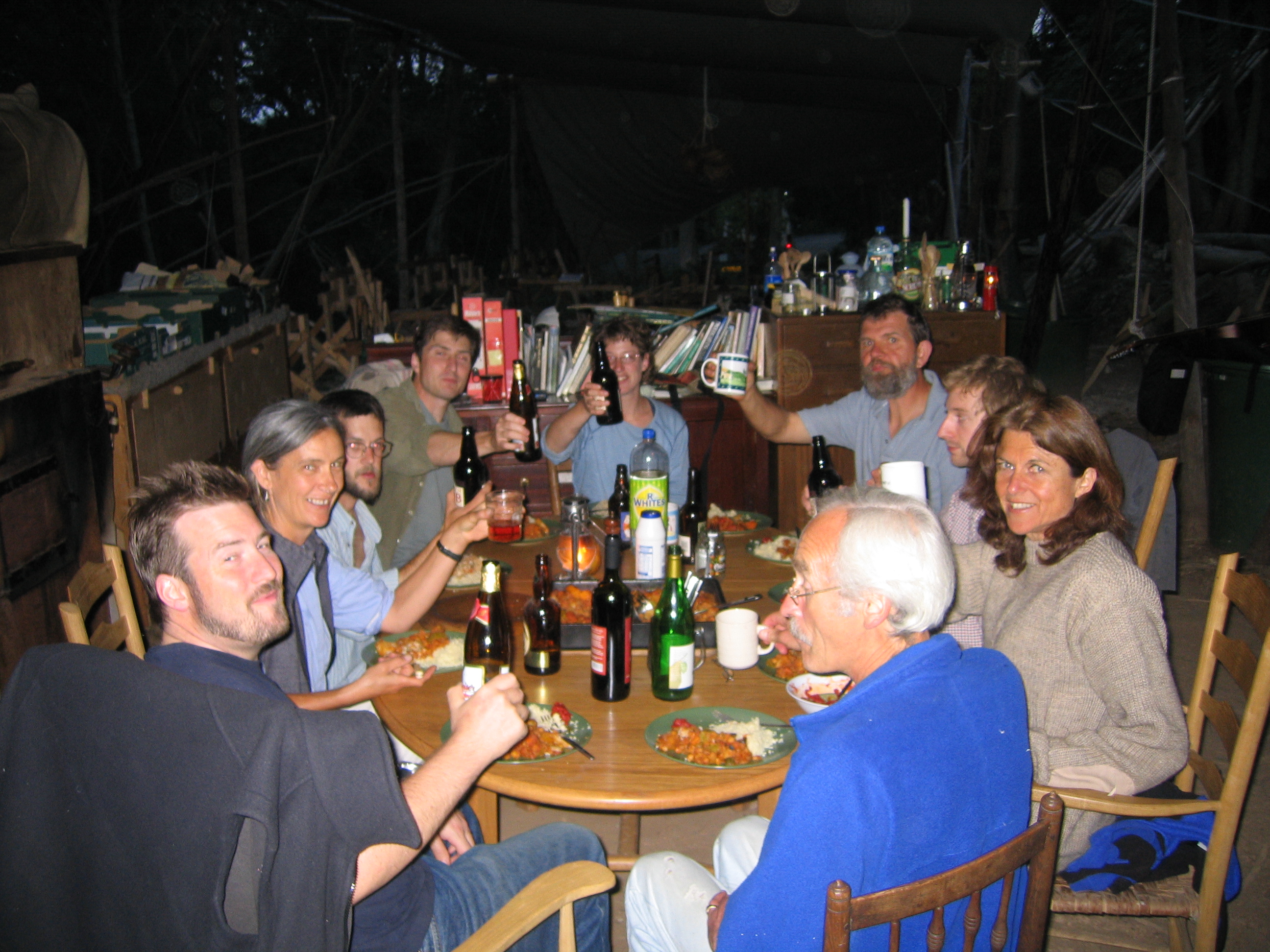
  • From 7pm on Saturday 26th there will be a celebration around a campfire on ‘the verandah’ at my woodland workshop, of music, song and merriment. Bring food and drink to share. Overnight camping will be available if you bring your own tent.
  • On Sunday morning starting at 11am, there will be a procession along the lanes from Brookhouse Wood to the Majors Arms at Halmonds Frome
  • From 1pm there will be a spit roast (plus vegan option) at the Majors Arms where you can buy a selection of good local beers and ciders with fabulous views across to the Welsh Hills.
  • At 3pm the procession will lead to Greenwood Cottage where Mike will unload his belongings and visitors will be served with tea, cakes and scones.
  • At 5pm the procession will lead back to Brookhouse Wood where visitors will be able to depart for home. If some of you would like to stay overnight for a quiet celebration of the Lunar eclipse, then please let us know.

Mike’s final woodland courses

The extra course in September, from 14-19th has now fully booked but we sometimes get cancellations a month or so before the start of a course, so if you wish to take part in a course this August or September, don’t be afraid to send us and e-mail to see if any places have arisen – abbott@living-wood.co.uk.

If you’d like to be one of the first to attend our small-scale courses at Greenwood Cottage next summer you can see the first few dates on the previous blog. We plan to add more dates for next summer, once we have finished the courses this September.

Moving from Brookhouse Wood at the end of September 2015

30 years of green wood courses

I set up Living Wood Training at the end of September 1985, so this September I shall be celebrating 30 years of running greenwood courses. In May 2016 I shall celebrate my 65th birthday and with it, I shall be moving all my activities back to my workshop and garden at Greenwood Cottage. This is a year earlier than I had planned but the timing feels right.

Retirement?

This will be anything but retirement. I have another book in the pipeline and I have several orders for chairs, which should keep me busy over the winter. In March and April I shall be offering my usual personal tuition for one or two people at a time (cost £190/day for one person or £250/day for two).

Courses at Greenwood Cottage

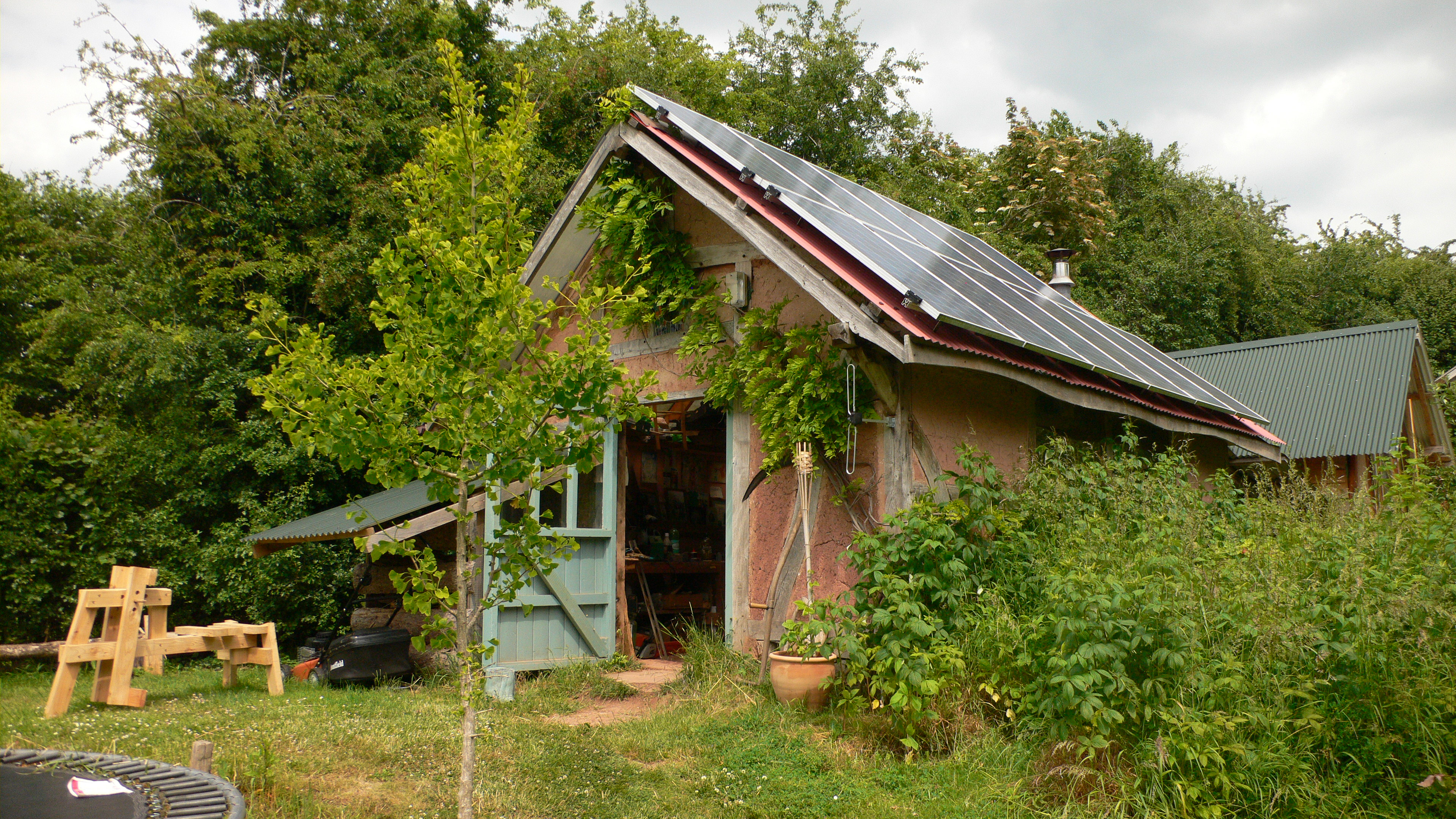
From May 2016 I plan to run a series of 5-day greenwood chair-making courses throughout the summer in my timber-framed, wattle-and-daub workshop and the surrounding garden. These will be similar to the existing woodland courses but limited to a maximum of 4 people per course. There is a wide selection of excellent b&b accommodation in the area. Glamping facilities should be available at Brookhouse Wood and camping will be available in a nearby field belonging to the local pub. Details of these will be available in the autumn.

Here comes the Sun

30 years ago, solar power and cordless drills were still in their infancy but having recently installed solar panels to the south-facing workshop roof, I will be able to replace some of my wood-fired equipment by the power of the sun. Camp-fire kettles and wood fired steamers might be retired but you can rest assured however, that the cleaving-brake, the shaving-horse, the froe and the drawknife will continue to play a key role in all my future courses.

Course dates for 2016 at Greenwood Cottage

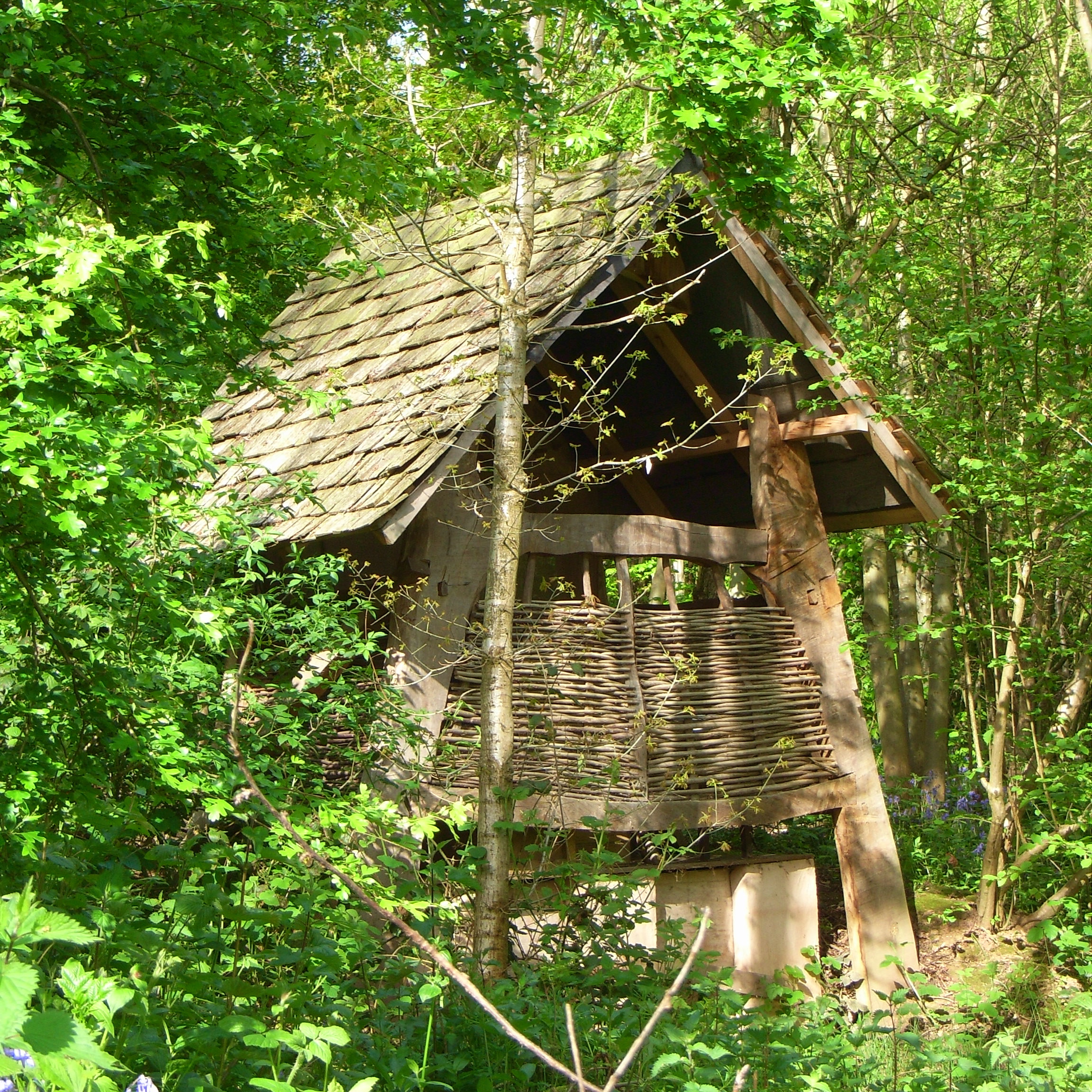
This will be the base for my courses from 2016

Here are the provisional dates for May and June 2016. All courses will run from Monday to Friday, 9am to 6pm with an hour lunch-break and the cost of a course place will initially remain at £480.

May 16th – 20th

June 6th – 10th

June 20th – 24th

There will be more courses from July to September but dates have yet to be confirmed. I am taking provisional bookings for the May/June courses but don’t make any payments as yet. All the details will be confirmed this October (2015) and firm bookings can then be made.

One extra course this year (2015)

All the courses for this summer were fully booked this May, so for those who have expressed a desire to participate in a woodland course, I am putting on one extra course from 14th to 19th September (2015), cost £480 per place. If you are interested, please e-mail me to book a place as soon as you can. E-mail me for more details, or phone 01531 640005 (8am to 8pm)

Green woodworking as a way to earn a living

There is a group on Facebook called ‘Spoon Carving, Green Woodworking and Sloyd’ of which I am a member. Yesterday a couple of interesting topics were posted:

Jarrod Stone asked

What IS “green woodworking” to you?
-How did you come to your definition?

Barn the spoon asked

1. What price including postage should I sell one of my nicely finished eating spoons made from straight wood.

2. How much do you think I should earn per annum as a Spooner working about 20 solid days a month (I think that is quite a nice amount of holidays).

Both threads produced an enormous response, which I have read with great interest. Having written a book entitled ‘Green Woodwork’ published in 1989, and having spent one and a half summers with Barn as my assistant, I couldn’t help but respond.Image
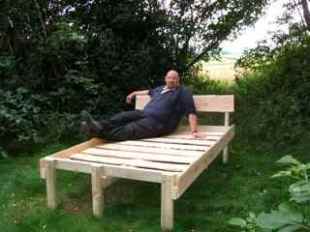
I still basically hold with what I wrote in 1989 (Green Woodwork pages 9&10): ‘The phrase that best sums up the type of work I now practice is ‘green woodwork’. In one respect it means simply working with green (or unseasoned) wood. But having learned how to make the most of the extraordinary properties of green wood, I have come to realise that many of the projects can be carried out without the need to rely on powered machinery. this liberation from the noise, the cost and the danger of such equipment gives rise to the other interpretation of ‘green woodwork’: it is energy-efficient, non-polluting and unbelievably fulfilling. It can be equally enjoyed by the life-served carpenter, the inquisitive novice and the primary-school pupil’.

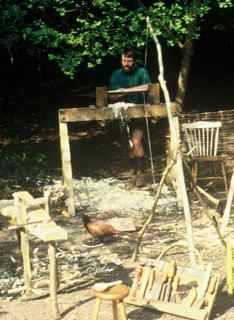
When in 1975 I read Herbert Edlin’s seminal book ‘Traditional Woodland Crafts’ I discovered the craft of ‘chair bodging’, that is using the pole-lathe to turn the legs of Windsor chairs from fresh cut beech trees. I cobbled together a primitive pole-lathe in the attic of the farm-house where I was living, and that became my hobby. Image
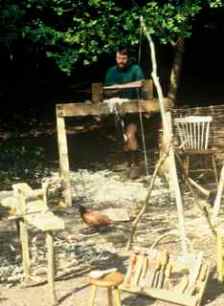
Ten years later I took up running green woodwork courses as a means of earning a living inevitably leading me to become involved in trying to formalise training programmes. I have come out of meetings bored to tears having struggled for hours trying to define ‘green woodwork’ or ‘green wood trades’ or ‘coppice crafts’.

For 28 years I have managed to eek out a living running woodland courses, where the end product is usually much less significant than the process and the surroundings, both in terms of the environment and the other people involved. Over that time my approach has evolved, and the dear old pole-lathe has virtually become obselete again in my workshop. We now use cordless drills and tenon cutters to produce perfect joints every time but we still use the age old craft of cleaving to get the fresh logs down to size. Our ‘lumber horses’ are made out of mass produced softwood, held together with turbo coach screws but the resulting chairs require no glue and no screws, occasionally using a cleft oak peg to hold a joint in place. Image
The important thing for me is that we all enjoy the creative process, and people go away with a fully functional object of which they are proud, which will be a constant reminder of a fulfilling week in the woods. That’s the best definition I can give.

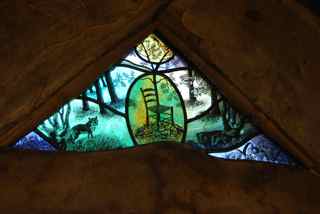
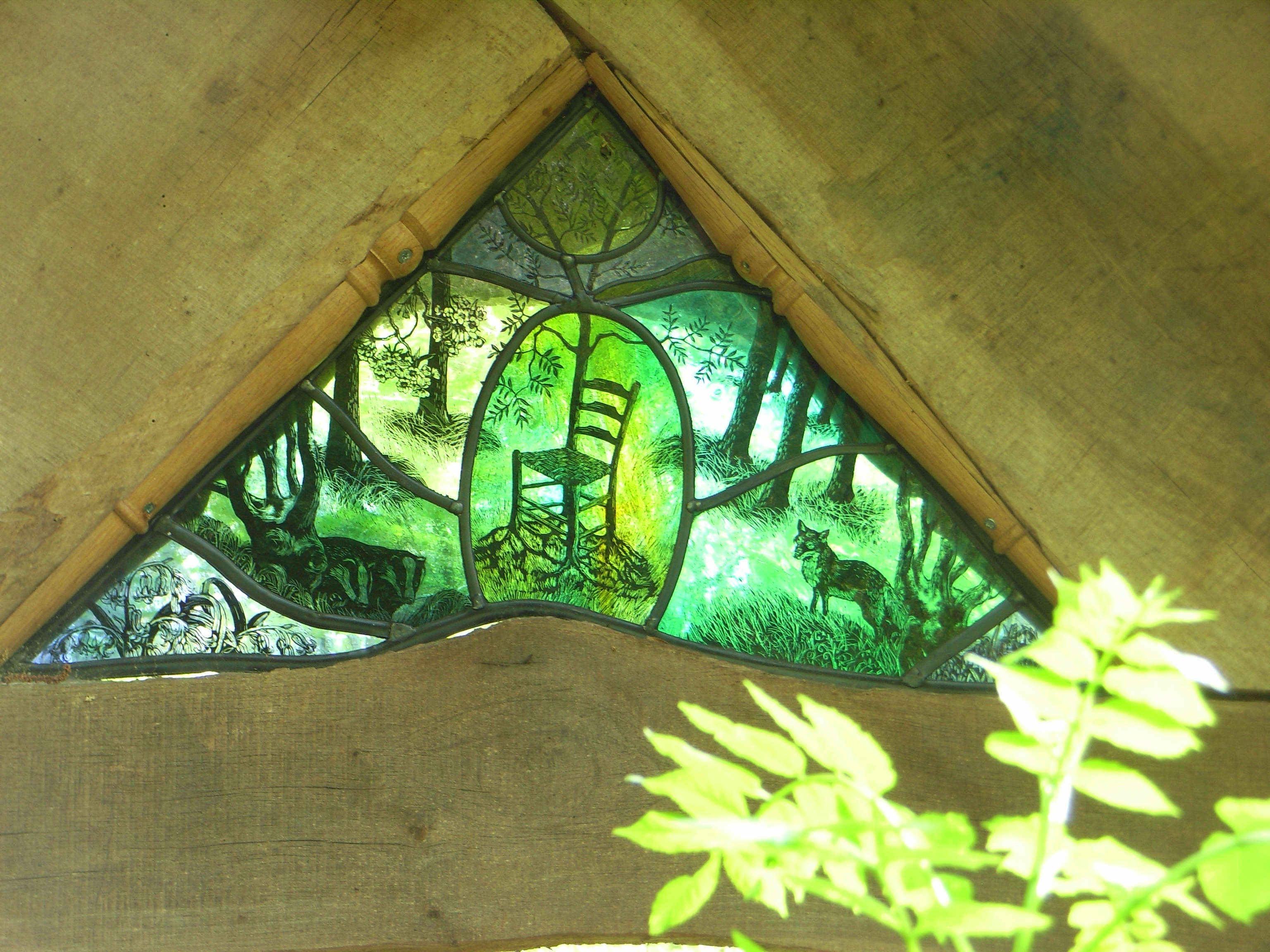
As for Barn’s concerns about pricing and the resulting income. I had a long discussion with my wife Tamsin, who runs a successful business producing illustrated stained glass. Image
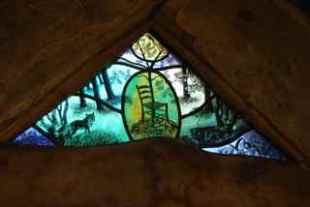
There is no simple answer to what price a spoon should be, nor how much a person should earn. It is all down to the individual spoon and the individual person. Tamsin suggested Barn should spend time talking to other full-time crafts-people. Jenny Crisp has been making baskets for many years and has some of her produce in the V&A museum in London but she works away steadily producing beautiful and functional items at a price that most people can afford. Much the same goes for Own Jones MBE, with his oak swill baskets or Lawrence Neal who took over the chair-making business from his father Neville.Image
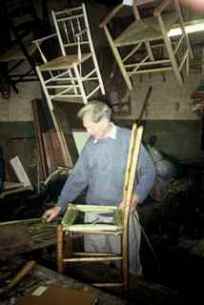
We have several items made by Jenny Crisp and Owen Jones in our house along with some of Barn’s spoons and bowls turned on pole-lathes by Robin Wood, Ben Orford, Steve Tomlin, Owen Thomas and James Wilkes. All these items enhance the quality of our lives. Image
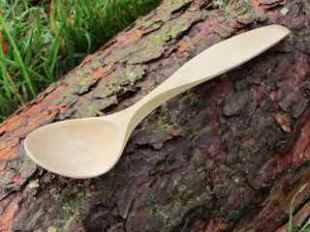
It may be that Barn is moving into the realms of artists or celebrities, where the functionality of his output is subordinate to the fact that he made it. Here he could talk to our mutual friend and successful artist, Jackie Morris, who is happy to charge a comparatively high price for one of her paintings – still a lot cheaper than a Van Dyke. Another realm to look at is that of the musician. I remember Richard Thompson (one of the founders of Fairport Convention) saying how fortunate he had been in his career: successful enough to earn a reasonable living but not so famous that he was able to stop working. That seems about right to me. Contrast with Jimi Hendrix, Jim Morrison and many others who maybe made it too big! Steering that line is as much up to fate as it is up to planning but it worth bearing in mind, which is obviously what Barn is struggling with at the moment.
I’m back from the woods

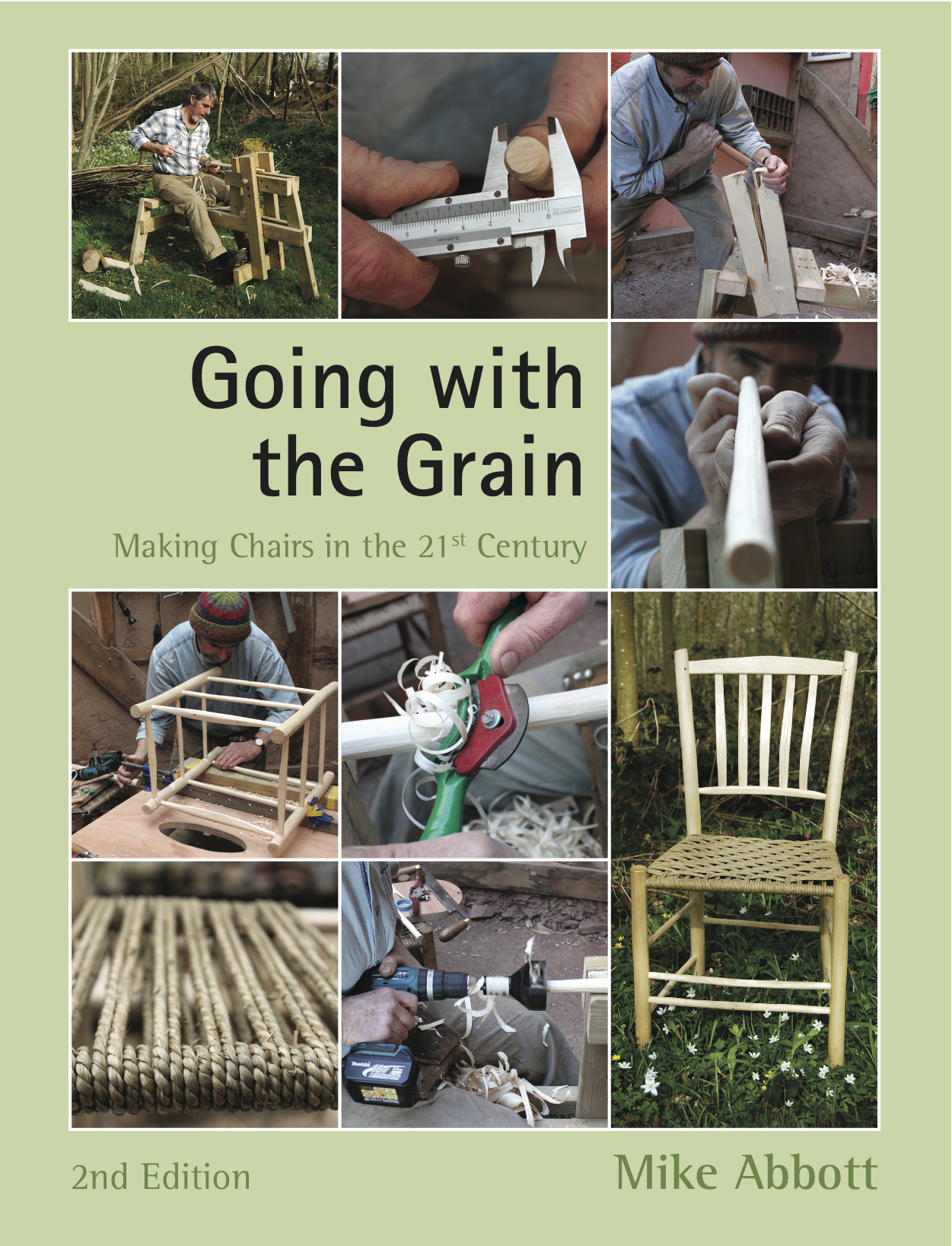
Hello again followers! 6 months have elapsed since my last entry. Mostly very pleasant months, lost in the woods with a flow of really great people coming to spend a week, away from their normal lives. With the help of some enthusiastic young assistants, Stephen, JoJo, Johnny, James, Jo, Sharyn and Rhun, we had yet another great summer giving a couple of dozen ash trees a whole new life in the form of some beautiful chairs. In between courses, I was working hard on new editions of both my current books, Living Wood and Going with the Grain, both of which are now available, just in time for you to give copies to your friends and relatives for Christmas.Image

I happened to be in the office when a journalist phoned to ask me about ash trees and chair-making but was taken aback when the article was published a week before it was due.

http://www.telegraph.co.uk/property/greenproperty/10409500/Eco-living-we-must-embrace-our-ash-trees.html

I’m afraid that when the article came out, the website hadn’t been updated since July but we now have the dates for 2014 posted for you all to find a suitable date.


Wrapping up the first course

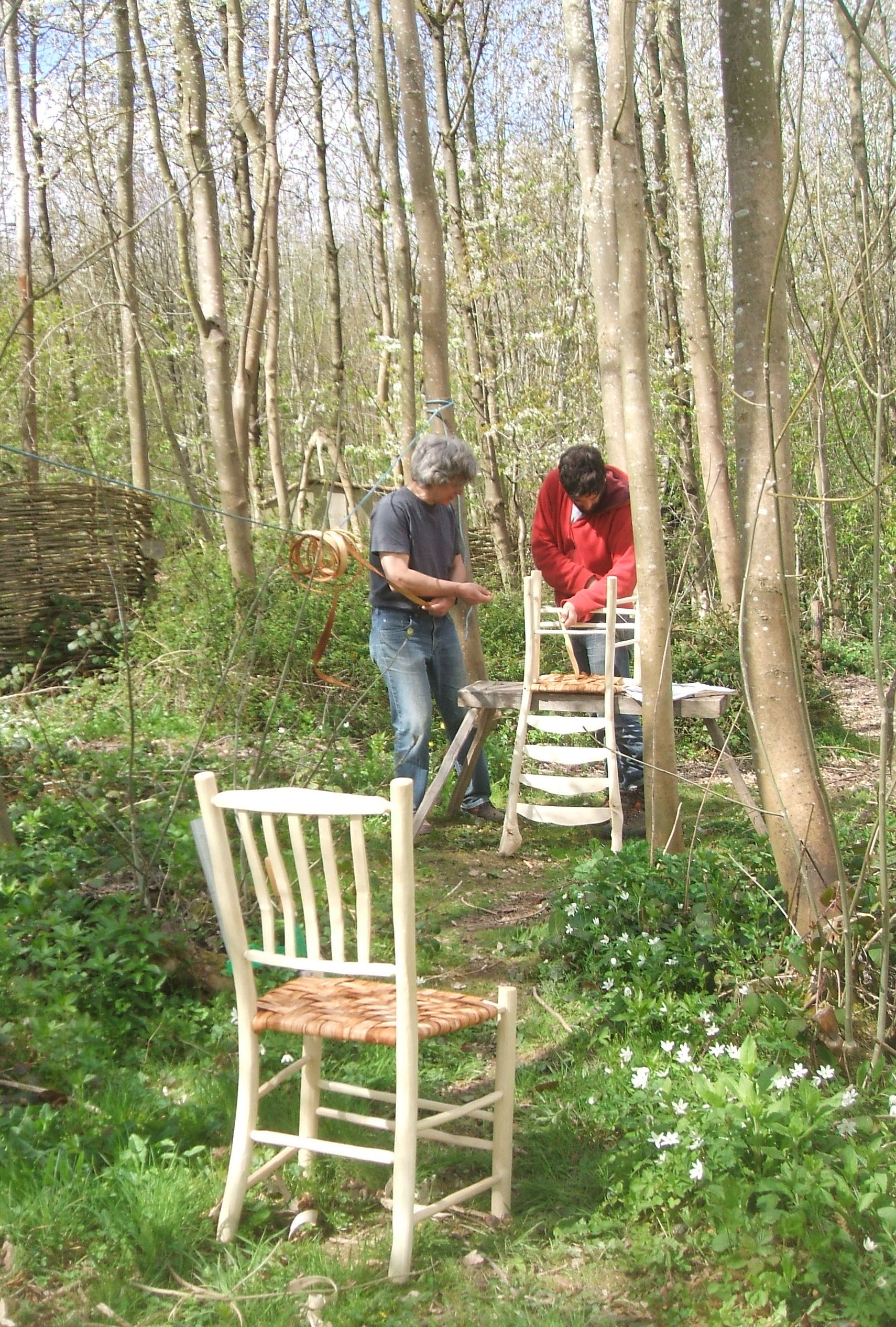
Having made all the parts for the chairs on Monday, Tuesday and Wednesday, Thursday had been spent in the sun starting the process of assembly. By the end of Friday the chairs had been fully assembled and oiled. Jo Morton had delivered a load of wych elm bark and I had talked to the group about the other options for seating their chairs. On Saturday (May 4th) Hans and Fransisco went for the wych elm and settled themselves among the anaemonies beneath the emerging cherry blossom to work on their seats.

Hans and Fransisco applying wych elm bark to their chairs, surrounded by spring flowers.

James helped Ian weave his seat using kambaa (a plaited palm cord from Tanzania) to match the chair he had made on a course a few years ago.

James helping Ian to finish the kambaa seat on his high lath-back chair

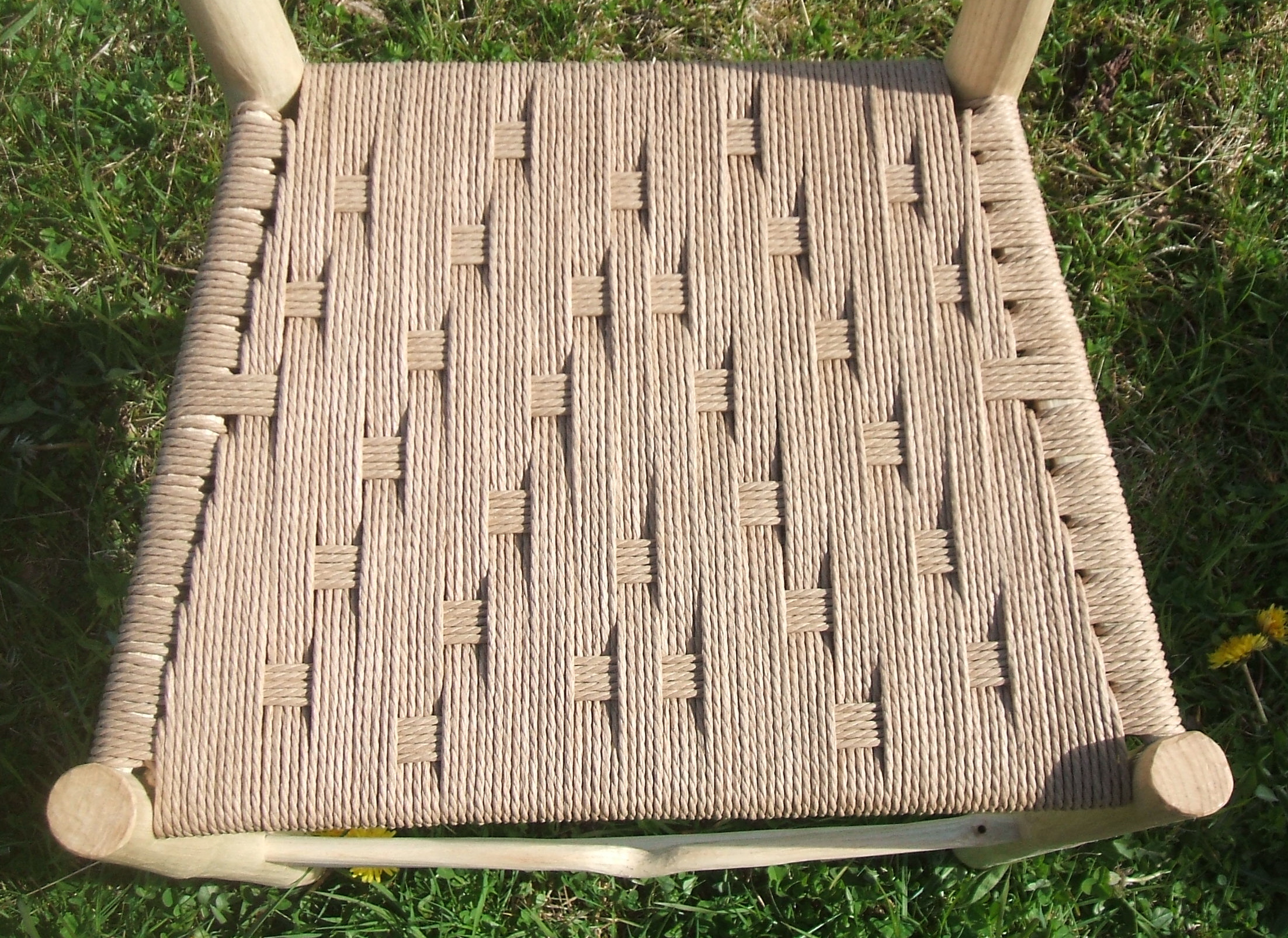
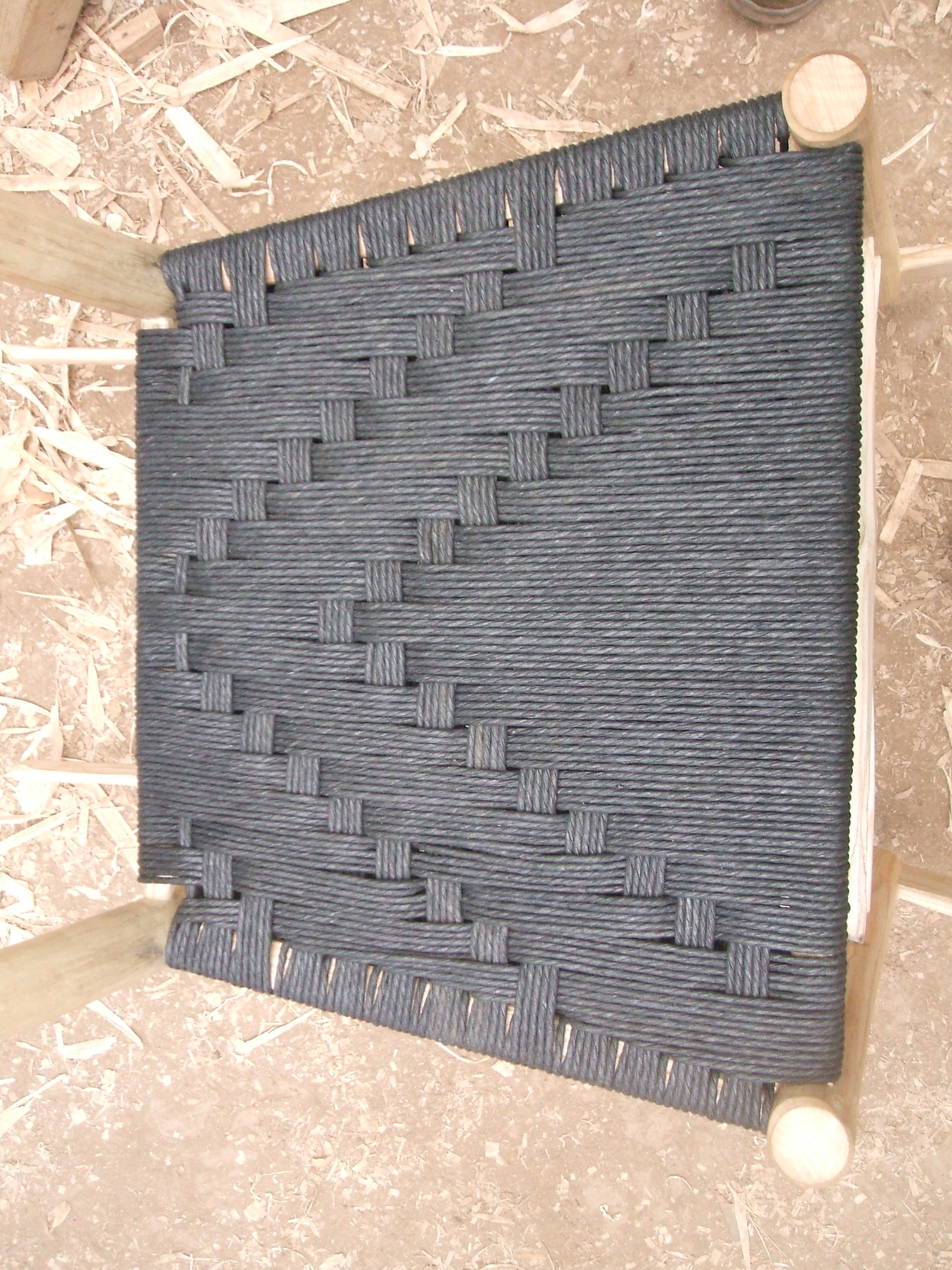
Phil decided on another variation of the woven Irish pattern that we have been developing over the last two years, as described in one of my earlier blogs.

Phil's seat with Danish cord in a woven Irish pattern.
Phil’s seat with Danish cord in a woven Irish pattern.

JoJo completed yet another variant of the woven Irish pattern based on Beth’s seat from September 2012, which in turn was inspired by Emma’s woven stool from 2009.

The seat woven by JoJo based on a pattern of Beth's in September 2012, which in turn was based on a stool woven by Emma about 4 years ago
The seat woven by JoJo based on a pattern of Beth’s in September 2012, which in turn was based on a stool woven by Emma about 4 years ago

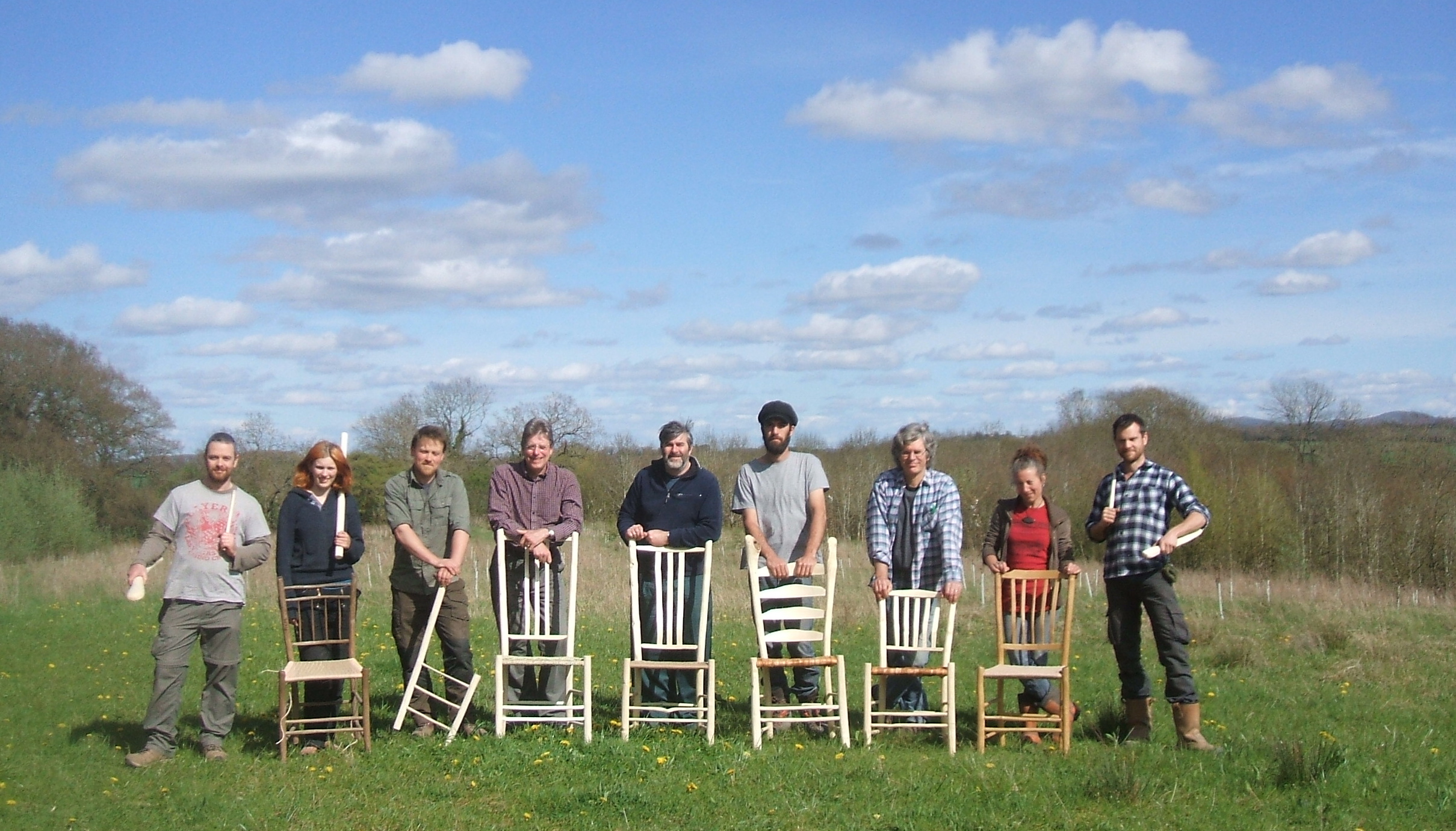
Aly joined us for the day to replace the seat on a chair she had made a few years ago. When they were all finished, they undertook the obligatory ‘end of course’ pose on the verandah, with the Malvern Hills in the distance, still visible before the leaves emerge.

The produce from the first chair-making course of 2013

Spring in the Woods

At last! After a mainly cold,wet summer last year followed by the long, cold winter, we started our first course of the year this week.

I think the miserable winter must have put people off the idea of a week in the woods, so we only had four bookings on this course but it gave me the opportunity to train up this year’s assistants. Stephen has returned as the main assistant, having worked with Barn as an assistant in 2009. Johnny, James and JoJo will be taking it in turns to work alongside Stephen in guiding this year’s students through their chair-making courses.

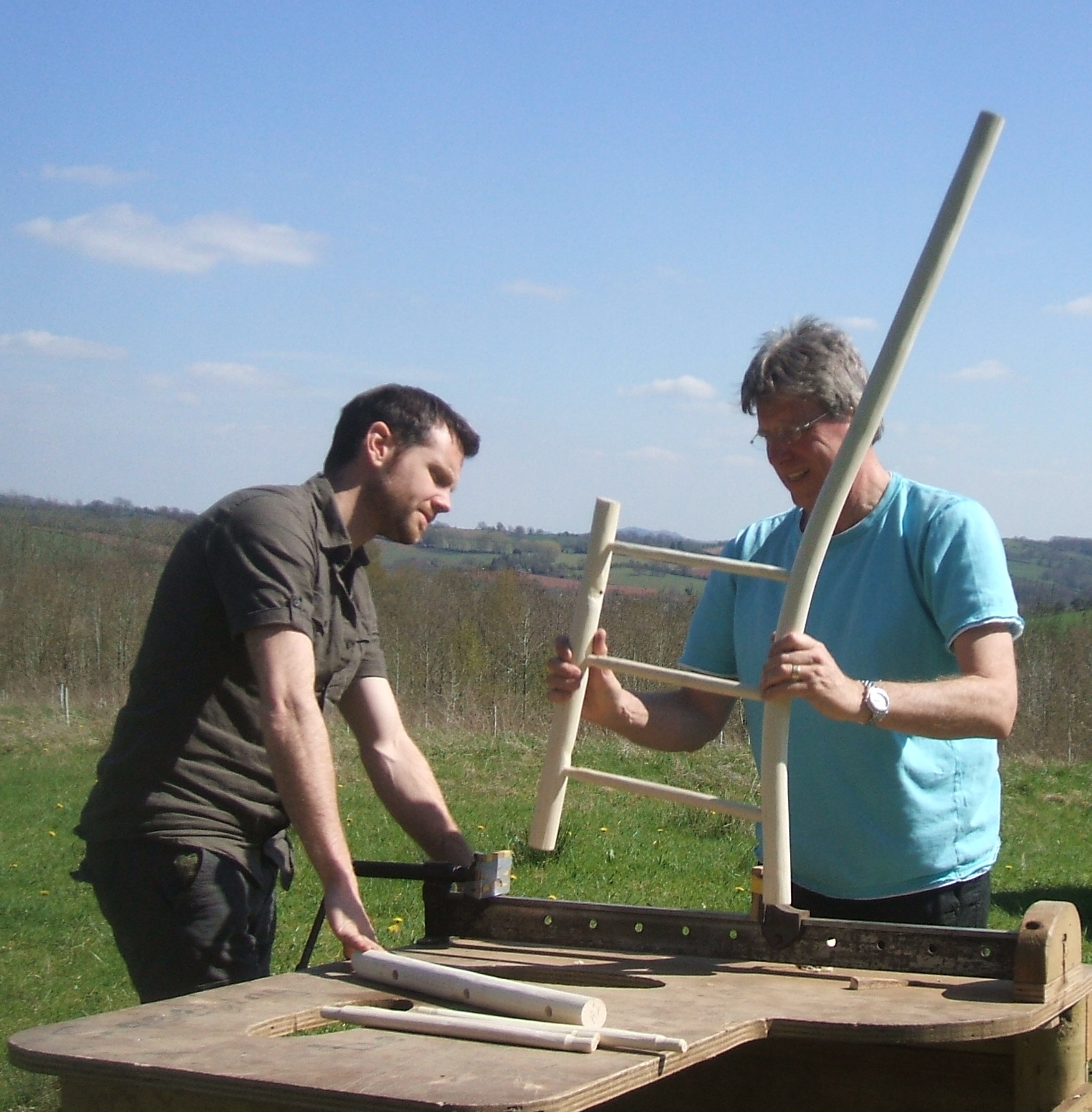
Stephen carefully sighting Hans as he locates where to drill into his chair legs

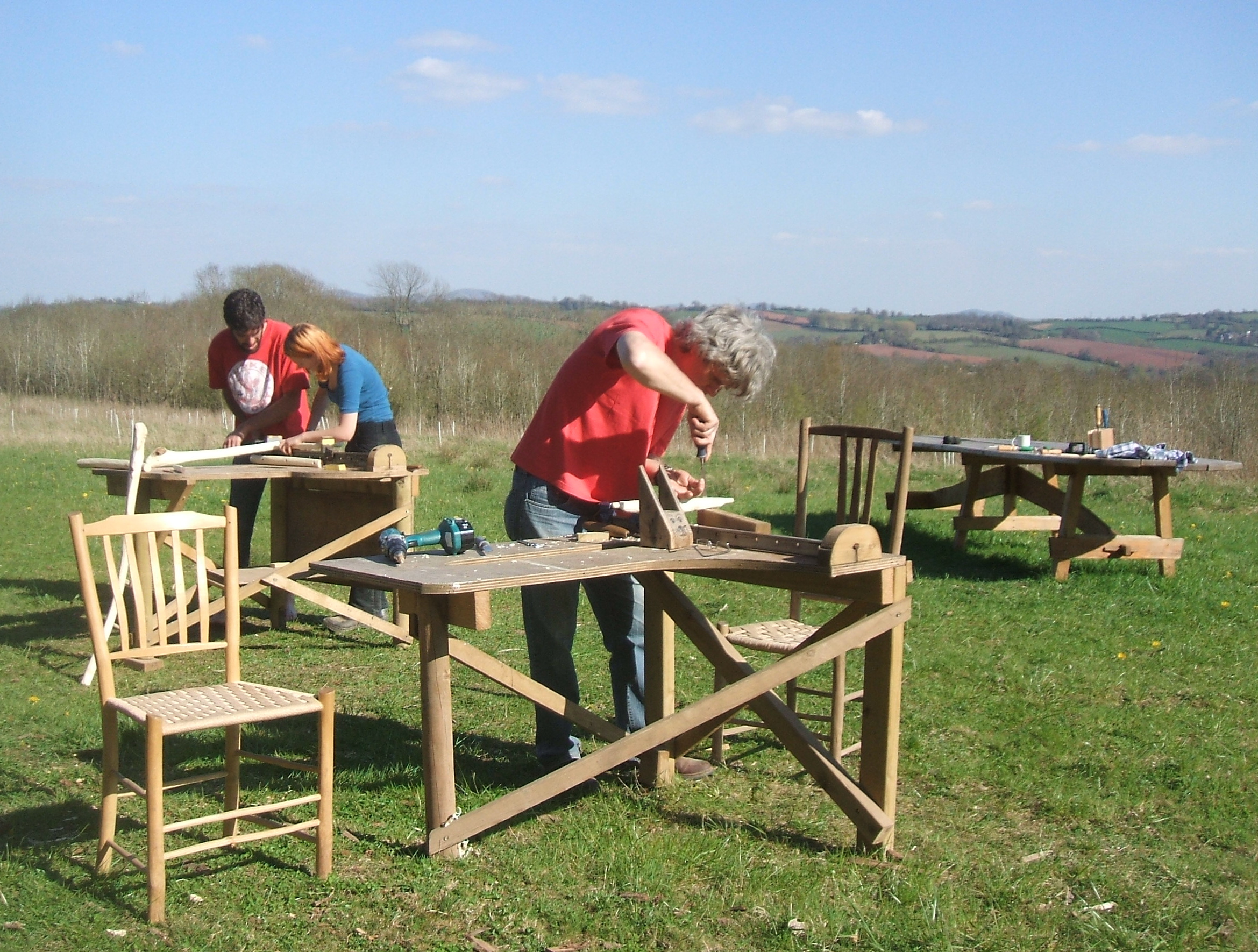
Yesterday the sun shone non-stop from the dawn chorus until sunset, so having made all the parts for the chairs during the first two and a half days, we moved some benches onto the field at the edge of the woods to start assembling the chairs.

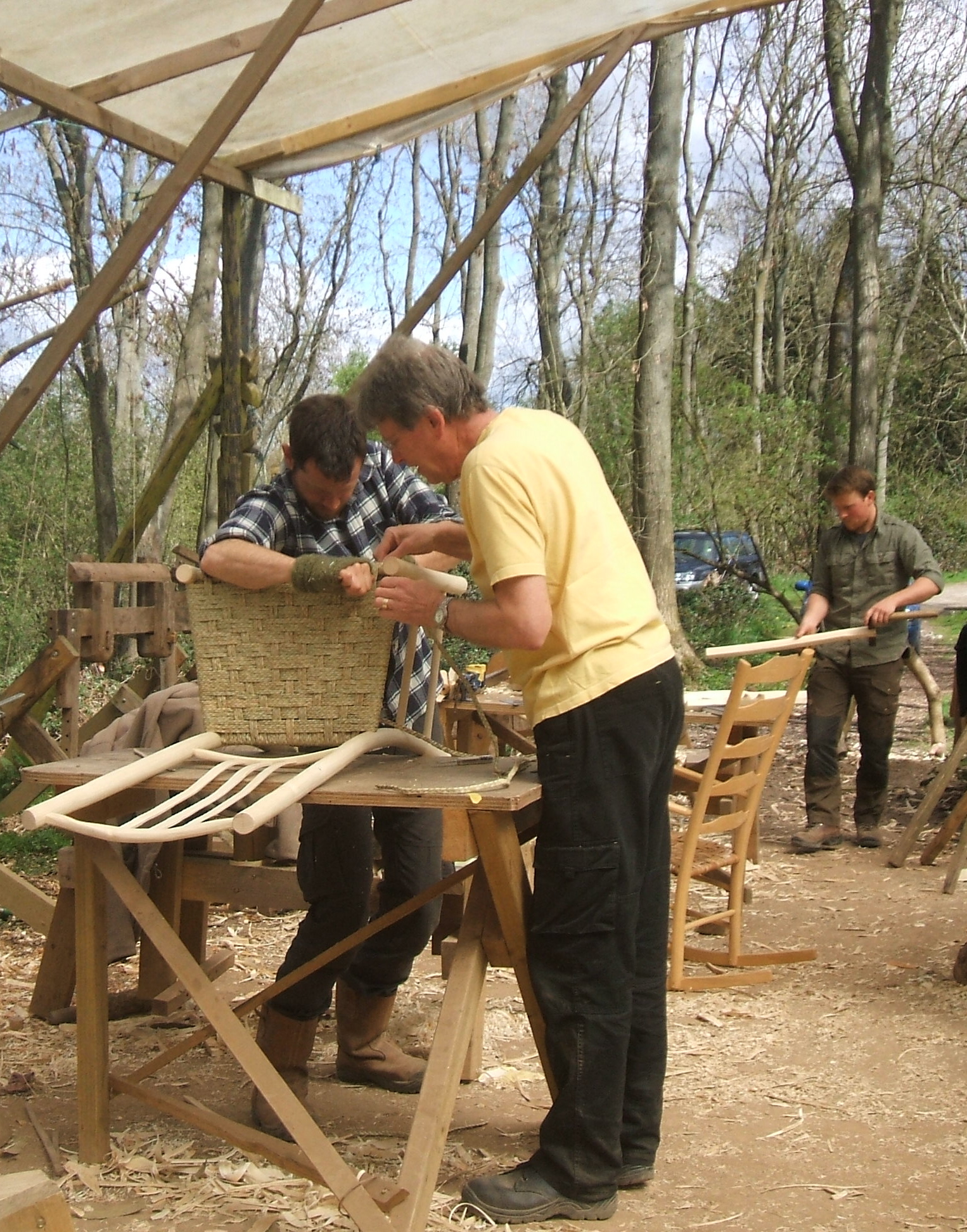
James helping Ian assemble his side panel

We were also able to use the magnificent dining table built last year by Owen, Steve and the other volunteers. As well as using it at lunchtime, it also serves well as a woodwork bench with a view across the valley to the Malvern Hills in the distance.

Hans cutting a mortice while JoJo and Fransisco squeeze together a chair frame

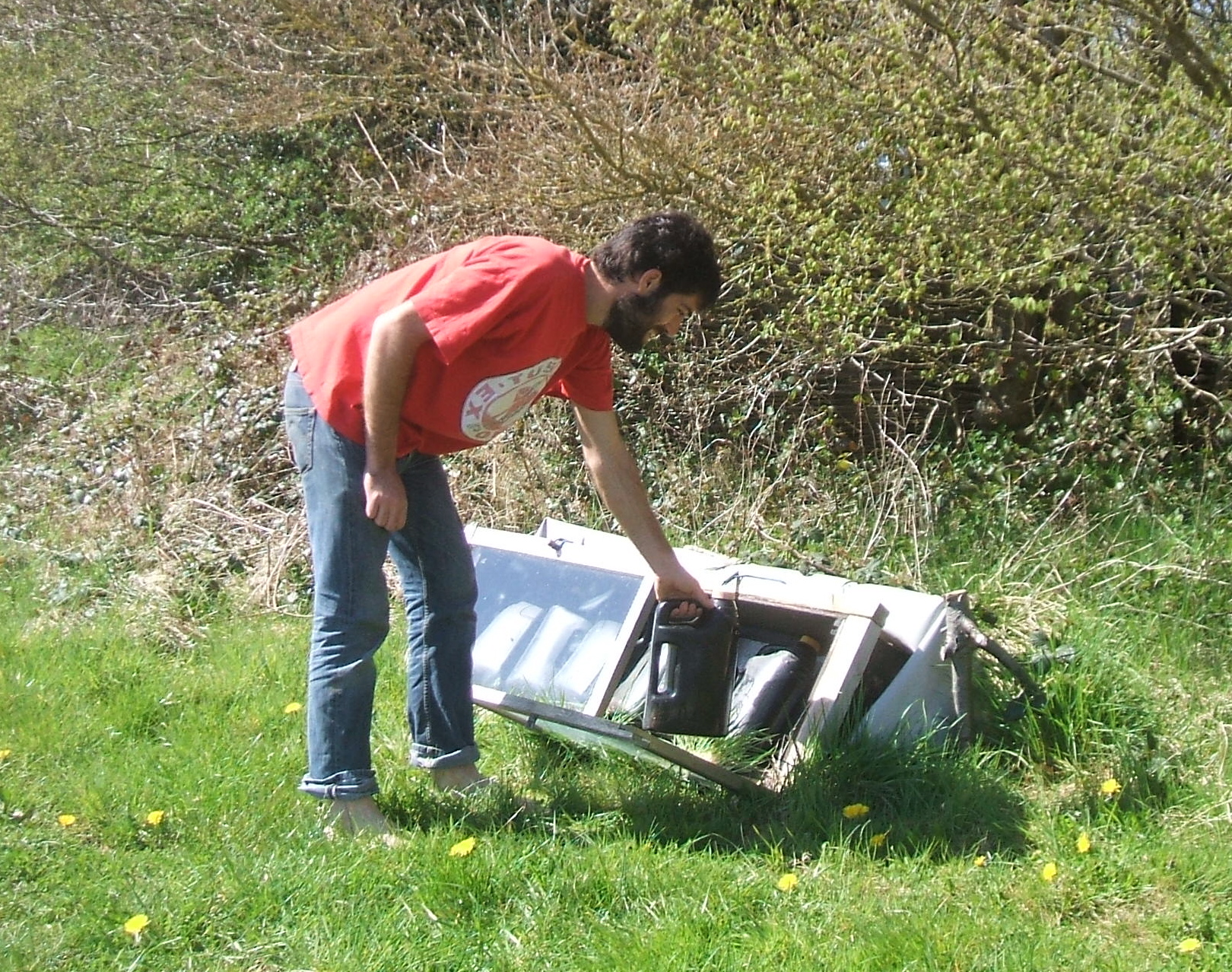
By lunchtime our simple solar water heater had warmed 7 gallons of water to just the right temperature for a shower.

Fransisco replacing one of the water containers back into the solar heater after his shower

The next two courses are about fully booked but we still have places for the course from June 10th to 15th. After the dry cold March and the showers in late April, I fully expect a blazing June, so book a course place soon and you will hopefully be able to spend a creative week,  basking in the Herefordshire countryside.

The Coiled Spring

I have just read through my previous blog entry – the secret power of trees and the rhythm of life – and it resonates more now than it did back in December.

Johnny Walshe has just posted a video he made while he took part in our Development Week at Brookhouse wood exactly a year ago. The sun was shining, the soil seemed too dry then but it crumbled beautifully under the horse drawn plough. Tom and Owen (Dillon & Thomas – I still think this is a brilliant band name) were in full voice, singing and playing around the fire, while others just gently mooched around the workshop.

Owen, Jack and the other assistants helped us get through the wettest summer ever with their energy, song and laughter but the Mayan prediction of the end of the world edged ever nearer. Little malfunctions started to happen – my chainsaw packed up in August, my car in November and all the time, news of ash dieback hung over us like the Grim Reaper. Two days after the courses finished in September, I helped my 92-year old father move into a nearby care home and by Christmas he was about settled there. We took a few day-trips, had some slap-up lunches together and took time to catch up on each other’s lives.

Eventually in January I had four good weeks tucked away in our cosy new cruck barn, frenziedly working on the new version of Living Wood (which I had enthusiastically announced on this blog way back in July). Then in February my father caught a chest infection and on 22nd he died – peacefully in his bed. ‘He’d had a good innings’ everybody says but it was heartbreaking to be with him for the last few weeks as he steadily lost the will to live. Surely there must be better ways to finish a life. Since then funerals, probates and sifting through his belongings have taken over from the new book. One consolation has been that I have felt spring has been holding its breath, encouraging me to sort out the unforeseen administration involved in the death of a parent.

So Johnny’s video reminds me that spring is aptly named – the coiled spring of the pole-lathe pole is quietly lifting the treadle back, ready for the next empowering downward stroke. The bluebells will eventually emerge and life will return to the woods with firewood being sawn, split and stacked. A steady stream of enthusiastic visitors will arrive to make more beautiful chairs in our amazing sylvan paradise and Living Wood 4th edition will be launched this summer, with its vibrant new cover and a new crop of photos taken at Brookhouse Wood over the last seven years.

The cover for Living Wood 4th edition

The Secret Power of Trees

Having seen the best hour’s telly a month ago when Countryfile had an hour featuring British woodlands, I have just listened to the best EVER radio programme on BBC Radio 4. It was all about the benefits of woodlands for human well-being. It would have been better still if I had been on it but there you go. If you didn’t hear it, go to i-player when it is available.

This is exactly the topic that I have been banging on about for the last 35 years and it seems to be sinking in.

Call it co-incidence or collective unconscious but this morning I got up early to write the Introduction for my new book. Here it is, hopefully along with some photos from the woods where I spend my summers feeling very good. Also a link to see a pole-lathe in action.

http://www.youtube.com/watch?v=2Cj_LBZkJh0&feature=context-cha

The rhythm of life!

I first discovered the pole-lathe in 1976 in a wonderful book entitled ‘Woodland Crafts of Britain’ by Herbert Edlin. Intrigued by the idea and wanting to work with wood but having very little money, I cobbled one together and the pole-lathe steadily crept into my life. For twenty years it was the mainstay of my career and ever since that first tentative treadle, I have struggled to put my finger on what it is that makes the pole lathe such a magical machine. Now I think I have finally nailed it!

Life is rhythm, rhythm is life.

Everything that is, was created in ‘The Big Bang’ or ‘The Seven Days of Creation’ or ‘Whatever’. I believe we can never comprehend how it all came about but here it is, and we have to live with it.

Life is ruled by one overriding law, expressed in different ways by different people:

What goes up, must come down

To each and every action, there is an equal and opposite reaction

The concept of Yin and yang

The only certainty in life is change

There ain’t no happy times without no pain – Paul Brady

And nothing exemplifies this law better than the rhythm of the pole-lathe..

  • The start of the downstroke requires a huge input of effort during which very little happens. Is it really going to be worth it?
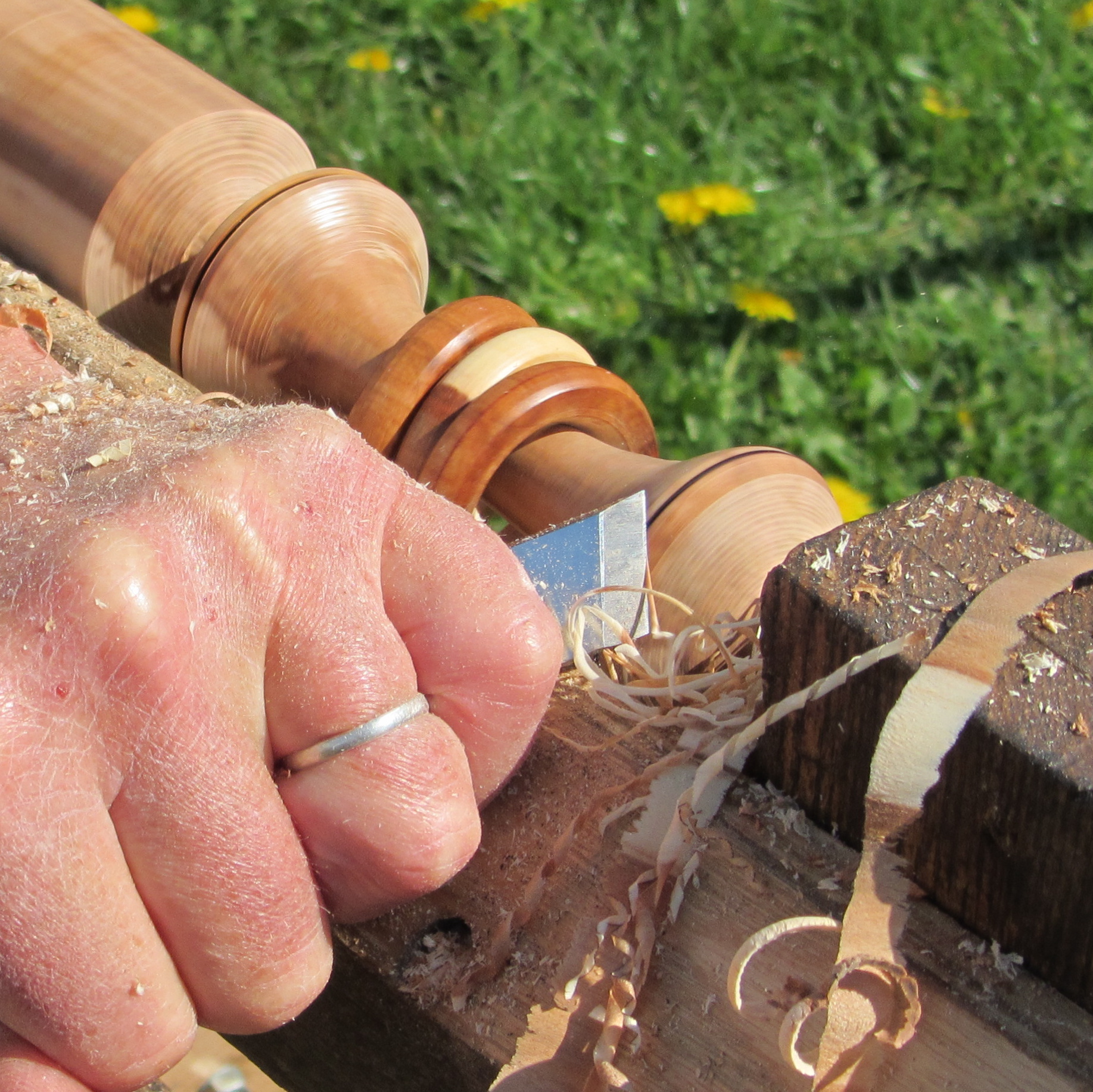
  • It then picks up speed and you bring the chisel into contact with the soft, succulent wood and the long smooth shavings start to glide. This is the moment to live for.
  • Then the stroke comes to an end, the action stops but all that creative energy is captured in the spring of the pole. Not death, just dormancy.
  • You have to let go, relax your pressure on the treadle and leave it to the pole to bring you back for the next episode. If you don’t let go, everything grinds to a halt.

Do you recognise this rhythm?

It is the rhythm of life – the heartbeat – day and night – the seasons – sex and drugs and rock-and-roll!ImageImageImageImageImageImage

seating patterns

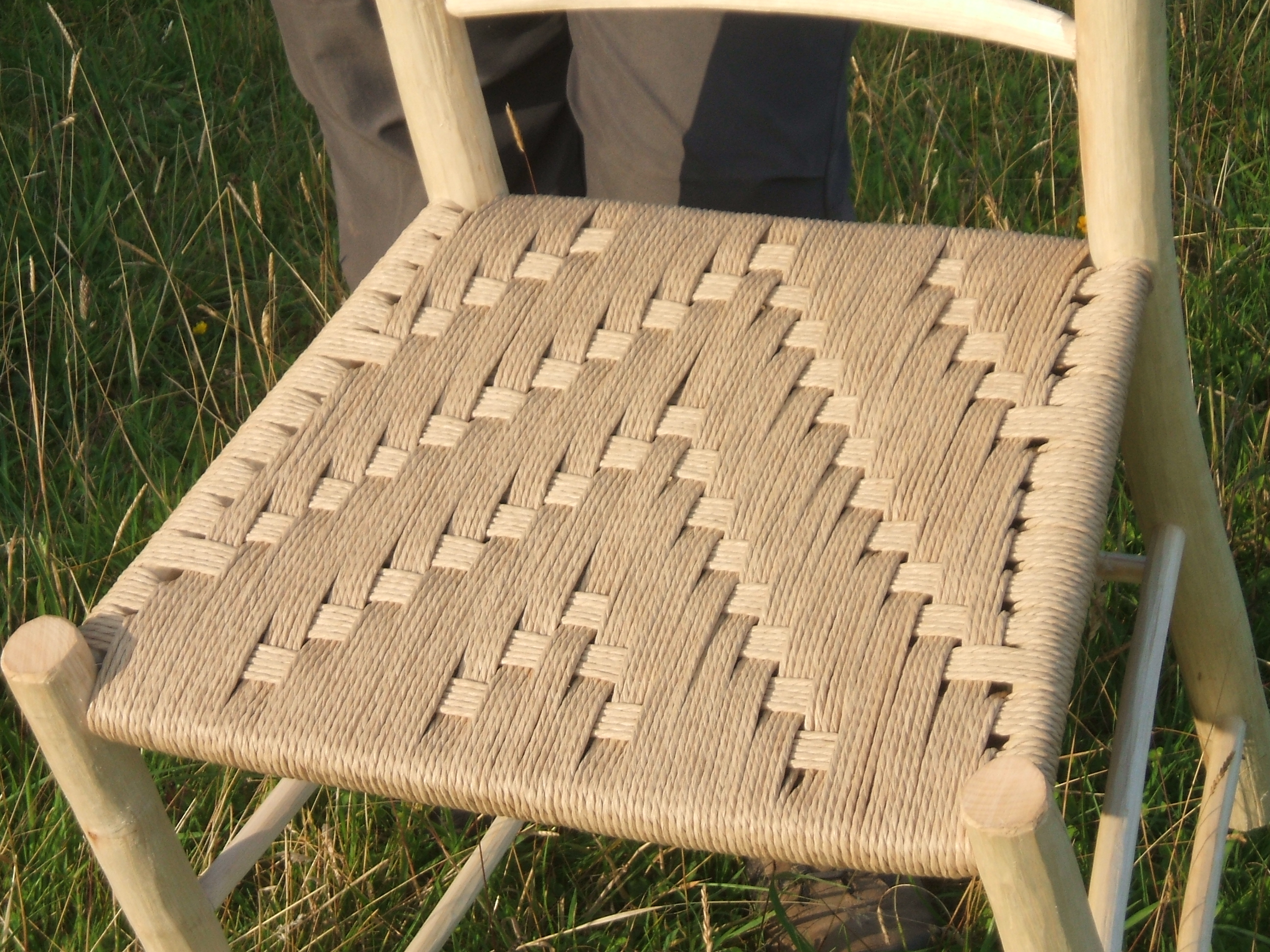
I’ve been talking about posting some of the seat patterns that cropped up over the last year. Now we have a good broadband service, c.o. Airband Community Internet, I can try to upload a load of pics. Here goes.

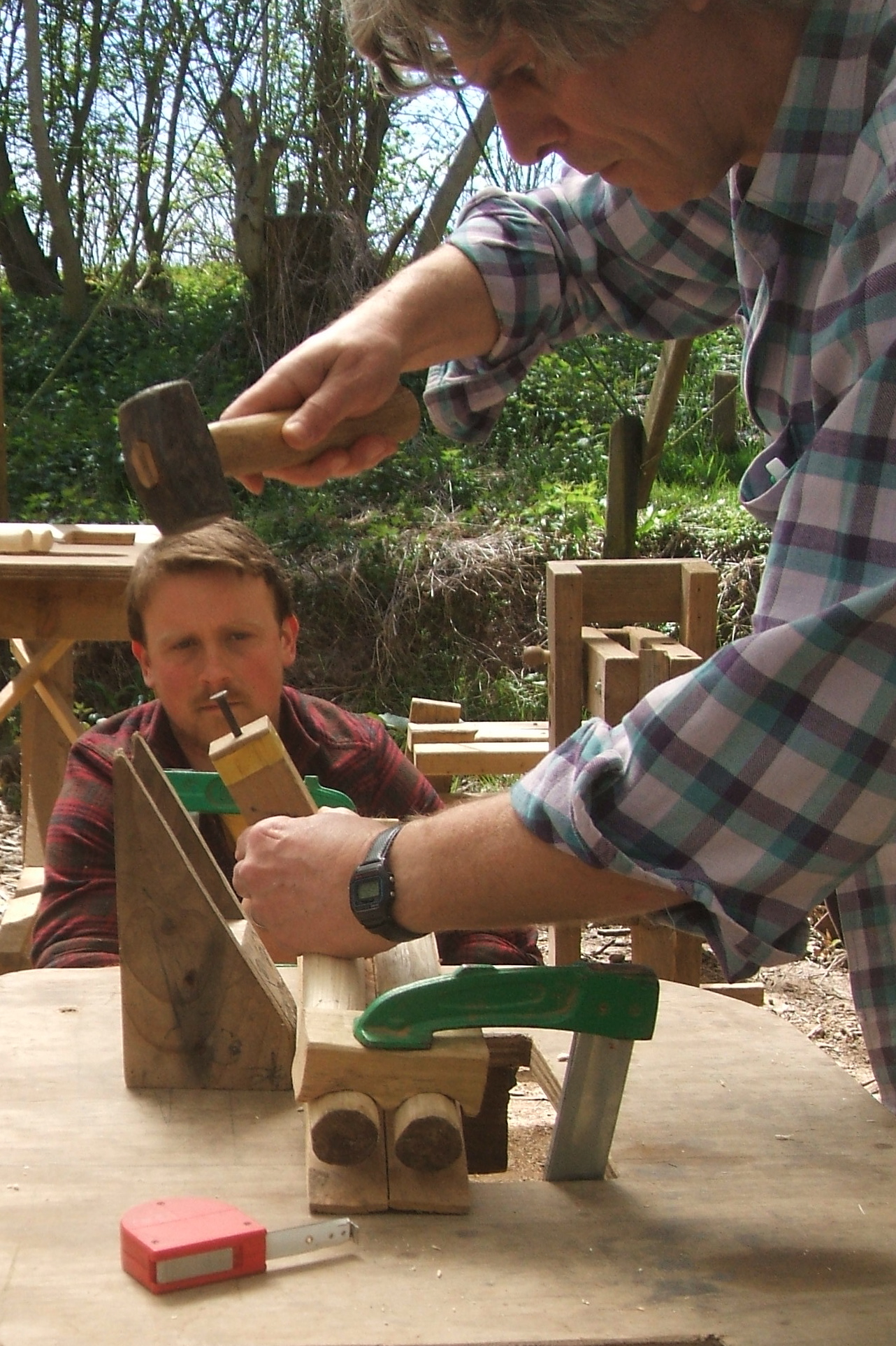
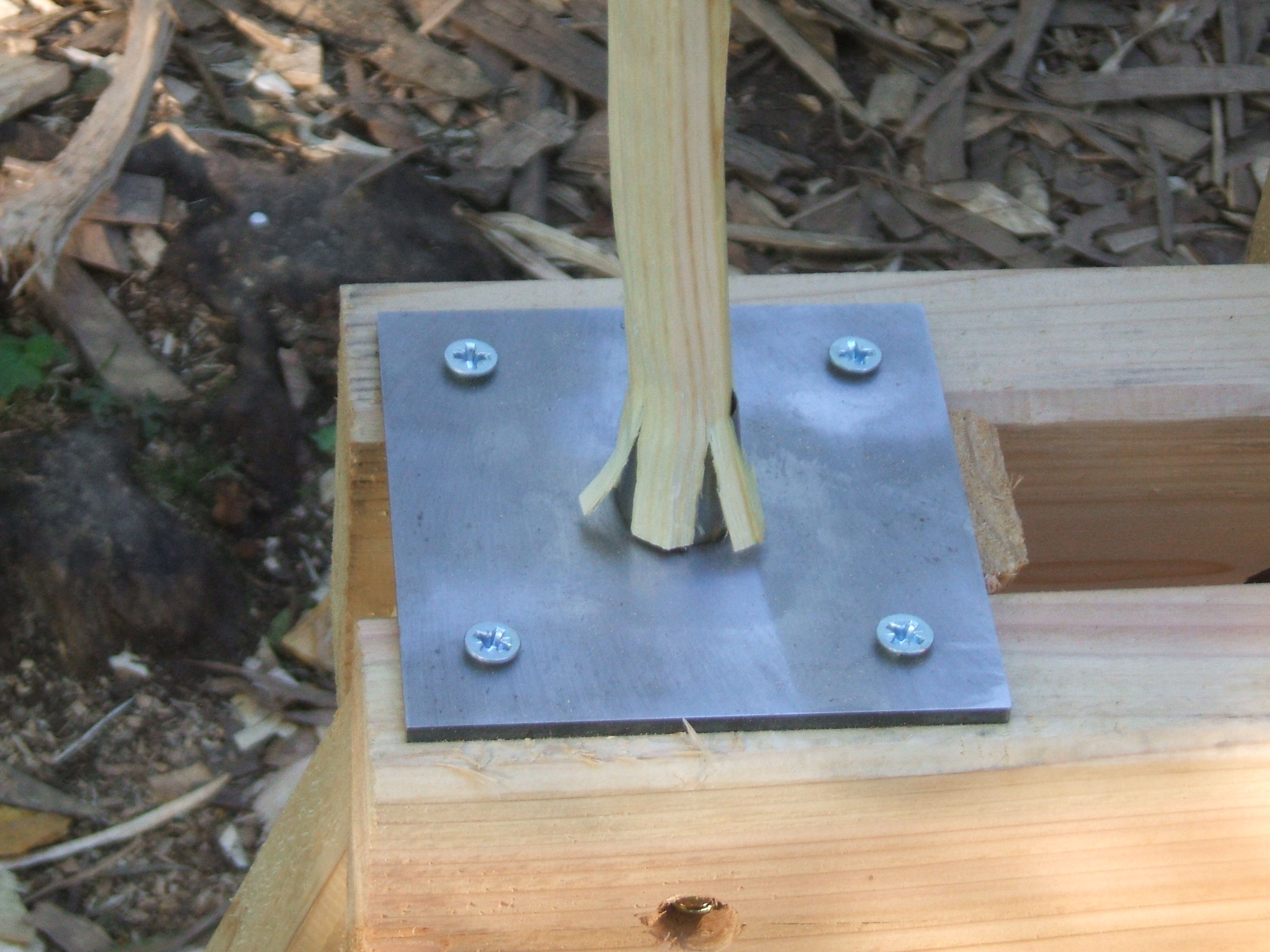
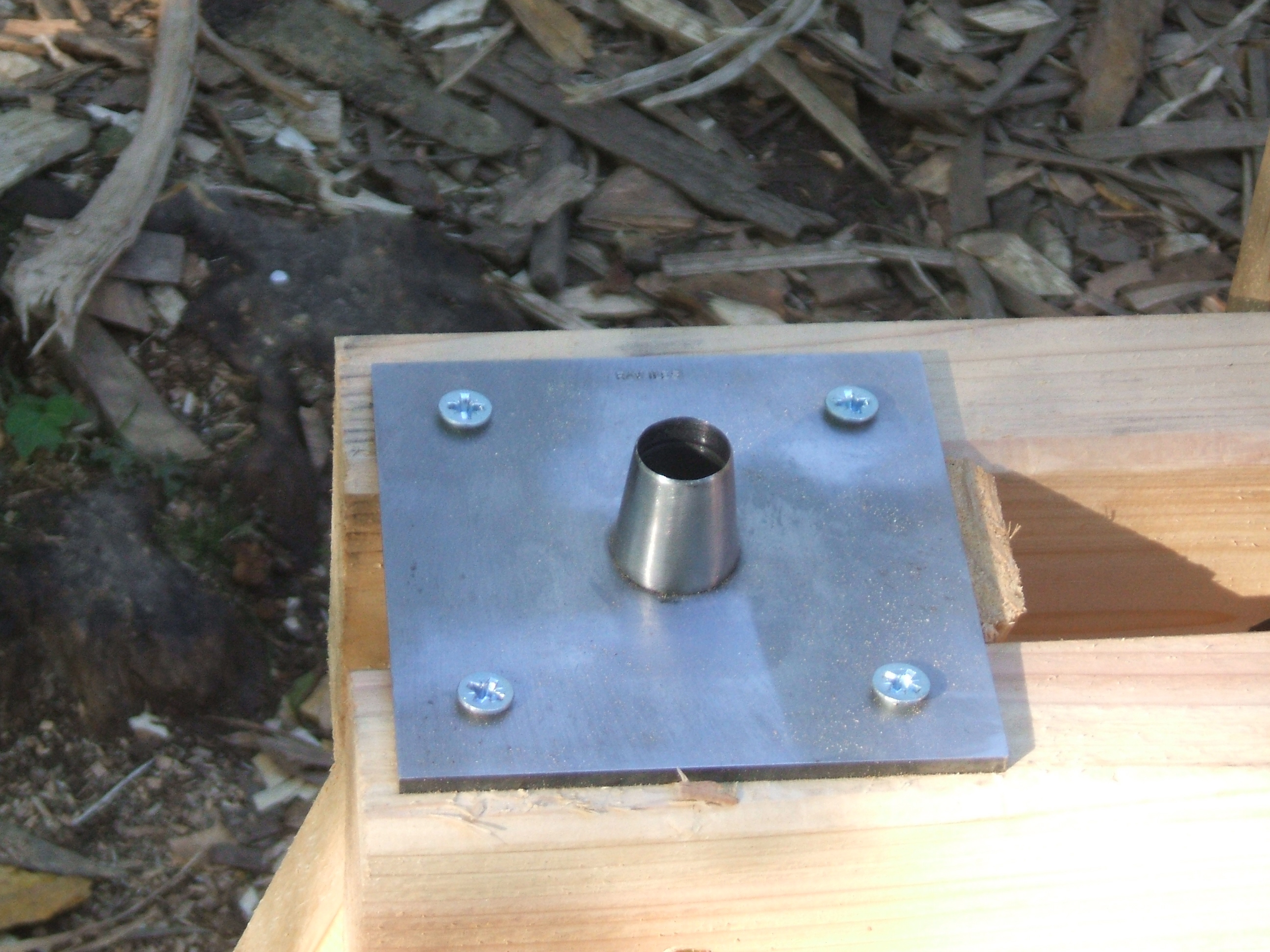
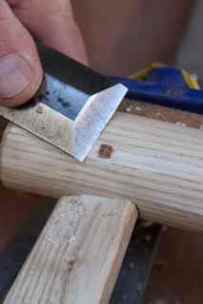
It’s still pretty time-consuming, so here’s two of the best seats plus a couple of pics of the latest technological development – the tenon sheaver – a prototype made by Ray Iles a couple of months ago. You then put the rail in the horse and ‘sheave’ back along it to remove any shoulders. We’ll give it a proper run for its money on courses in 2013.

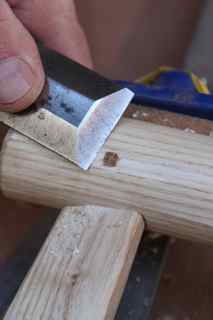
putting a tenon onto the end of a chair rung